
Mice in Your House? Signs, Health Risks & When to Call a Professional
This reference is written by the pest control technicians at Wicklow Pest Control - PMU-certified professionals serving Co. Wicklow and Leinster since 1990.
The seven signs described below are those most commonly identified during professional surveys in Irish residential and commercial properties. Severity indicators reflect typical infestation stages encountered in practice.
A mouse infestation in an Irish home is often well-established before the householder becomes aware of it. Mice are nocturnal and avoid open spaces - by the time visible signs appear, the population is typically in the tens rather than single digits. Knowing what to look for, and understanding what each sign means in terms of infestation severity, helps you act before the problem grows.
The 7 Signs of Mice in Your House - Professional Reference Table
| Sign | What to Look For | What It Means | Severity Indicator |
|---|---|---|---|
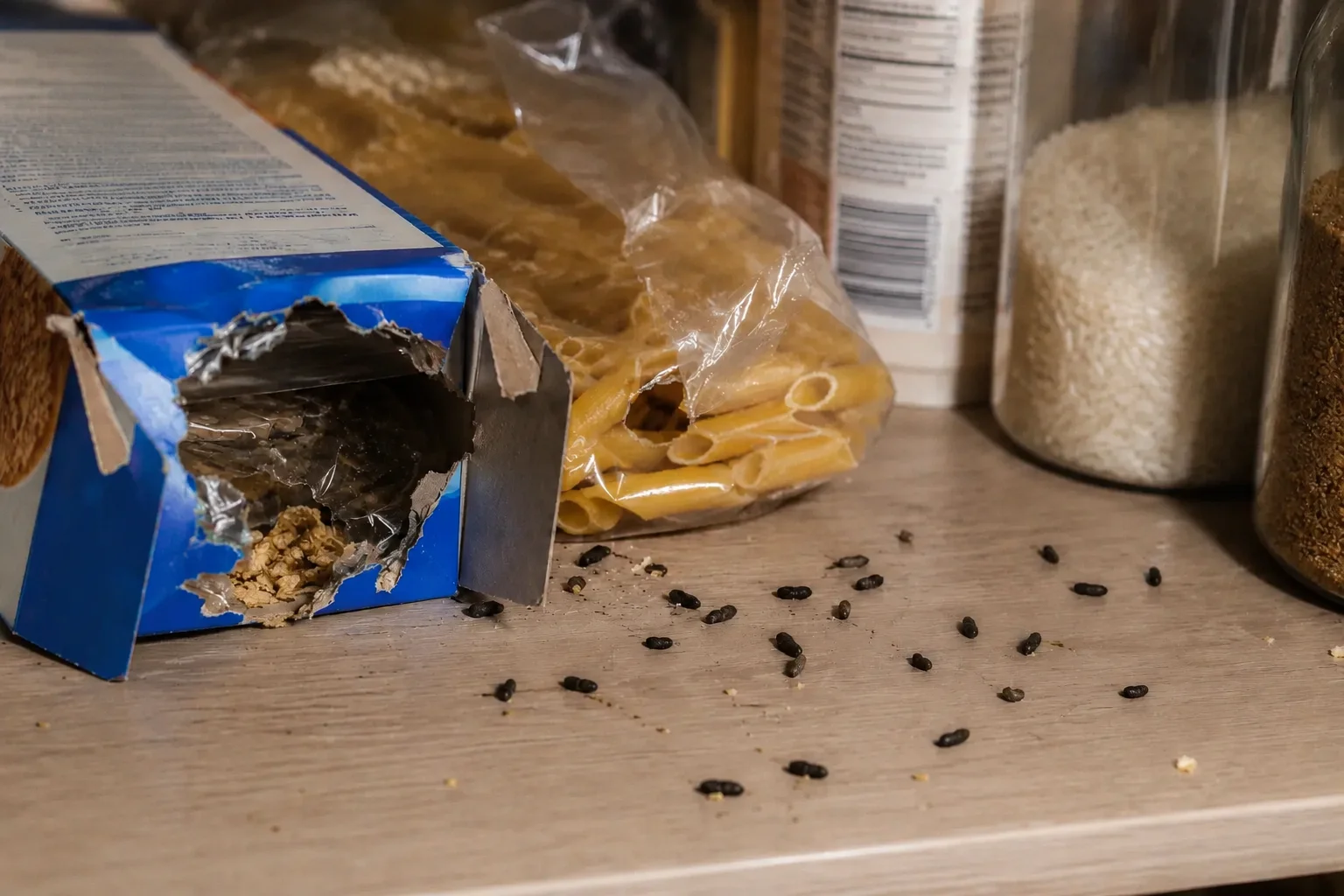
| Droppings | 3-6mm, dark spindle-shaped pellets. Found along wall lines, behind appliances, in food cupboards, loft spaces. | Confirms active mouse presence. Dropping volume and distribution indicate population size and activity range. | Fresh (moist, dark) = active. Multiple locations = established infestation. |
| Gnaw marks | Chewed food packaging, cables, skirting boards, wooden furniture. Pale, sharp-edged marks indicate recent activity. | Mice gnaw continuously to keep incisors at working length. Cable gnawing creates fire risk from electrical insulation damage. | Cable gnawing = urgent. Multiple materials = long-established. |
| Grease runs / smear marks | Dark greasy marks along wall bases and around entry holes. Most visible on pale surfaces near gaps. | Indicates a regularly used mouse run. The grease deposits build over time from repeated contact with fur. A pronounced run = heavy traffic. | Heavy, continuous marks = established run, high activity. |
| Nesting material | Shredded paper, insulation, fabric, cardboard. In loft voids, under kitchen units, inside cavity walls, behind fridges. | A completed nest indicates breeding is occurring or imminent. Nesting material varies - mice use whatever is available in the immediate area. | Active nest with young = infestation established. |
| Scratching or scurrying sounds | Scratching, scurrying, and squeaking sounds at night - particularly in ceiling voids, wall cavities, and under floorboards. | Nocturnal movement sounds confirm active population within the structure. Most audible in the hours after midnight when human activity is low. | Sounds in multiple locations = significant population. |
| Ammonia smell | Strong ammonia-like odour in enclosed spaces - under kitchen units, in lofts, inside cupboards. | Concentrated mouse urine produces a distinct ammonia smell in areas with heavy activity. Detectable smell typically indicates a large or long-established infestation. | Pervasive smell = high population density. |
| Live or dead mice visible | Seeing a mouse, especially during daytime hours. Dead mice found in open areas. | Mice are naturally nocturnal. Daytime sightings indicate population pressure - more mice than harbourage space or food can support comfortably. Dead mice in open areas may result from natural competition or secondary poisoning. | Daytime sighting = significant infestation. Act immediately. |

Does 2 Mice Mean an Infestation?
Yes. Two visible mice in a property strongly indicates an active infestation, not isolated individual animals. Mice live in social groups, breed rapidly, and rarely enter a property alone. Where two are visible, the population within the building is typically considerably larger.
The house mouse (Mus musculus) is a social animal. A mated pair in a property, with accessible food and suitable harbourage, can produce 5-10 litters per year with 3-14 young per litter. Young mice reach sexual maturity at 4-6 weeks. Without intervention, a property with two mice in September can house a population numbering in the dozens by December.
Two mice visible also implies the infestation has progressed to a point where population pressure is causing animals to be seen - mice prefer concealment. If you are seeing two, there are more you are not seeing.
Health Risks from Mice in Irish Homes
The house mouse is a recognised vector of several pathogens relevant to public health in Ireland. The following health risks have been confirmed in association with mouse infestations:
| Pathogen | Disease | Transmission Route | Relevance in Ireland |
|---|---|---|---|
| Salmonella spp. | Salmonellosis (food poisoning) | Droppings and urine contaminating food surfaces, utensils, food itself. Transmission is indirect - handling contaminated surfaces then eating without hand washing. | Most common zoonotic risk from mice in Irish homes and food businesses. Notifiable disease in Ireland. |
| Leptospira spp. | Leptospirosis | Contact with infected urine via skin abrasions or mucous membranes. Can survive in damp conditions. Leptospirosis (Weil's disease in its severe form) is primarily associated with rat urine but is also carried by mice. | Uncommon from mice alone but present. Higher risk where mice have access to water sources. Notifiable disease. |
| Hantavirus | Hantavirus pulmonary syndrome / haemorrhagic fever | Inhalation of dried particles from mouse droppings, urine, or saliva. Risk during cleaning of contaminated spaces without respiratory protection. | Rare in Ireland but documented in Europe. Protective equipment mandatory when cleaning after confirmed infestation. |
| Mouse allergen proteins (Mus m 1) | Allergic sensitisation, asthma exacerbation | Mouse urine contains Mus m 1 protein, a potent airborne allergen. Dried urine deposits release particles into the air. | Significant in properties with children or asthma sufferers. Ireland has one of the highest rates of childhood asthma in Europe. |
When to Call a Professional Pest Controller
DIY trapping is appropriate for a very small, localised mouse presence. Professional treatment is indicated when:
- 1 You are catching mice for more than 7-10 days without the catch rate declining
- 2 You are finding fresh droppings in multiple rooms or locations
- 3 You can hear mice in ceiling or wall voids - areas inaccessible to standard traps
- 4 You have identified gnaw damage to electrical cables
- 5 You have found nesting material - suggesting breeding is occurring
- 6 You are seeing live mice during daylight hours
- 7 The property is a food business, healthcare facility, or childcare setting - regulatory compliance requires professional treatment and documentation
A PMU-certified professional pest controller will carry out a full property survey, implement a targeted baiting programme in areas inaccessible to householders, monitor bait take at follow-up visits, confirm elimination, and provide written proofing recommendations to prevent re-entry.
Frequently Asked Questions
How do you know if you have mice?
The most reliable early signs are: mouse droppings (3-6mm, dark, spindle-shaped), gnaw marks on food packaging or cables, and scratching sounds at night in ceiling voids or wall cavities. Droppings are the most commonly found evidence. A single dropping confirms the presence of mice; droppings in multiple locations confirms an established infestation.
Does 2 mice mean an infestation?
Yes. Two visible mice in a property indicates an active, established infestation - mice are social animals and rarely enter structures alone. A breeding pair can multiply rapidly; the visible population represents only a fraction of the total number within the structure. Act promptly: contact a PMU-certified pest controller for a survey and treatment programme.
Are mice dangerous to health?
Mice are vectors for Salmonella (the most common risk), Leptospirosis, Hantavirus (rare in Ireland), and potent allergen proteins linked to asthma exacerbation. The primary route of Salmonella transmission is indirect contamination of food preparation surfaces and food by mouse droppings and urine. All food contact surfaces in a property with a mouse infestation should be disinfected thoroughly.
Can mice make you sick even if you don't touch them?
Yes. Mouse urine contains allergen proteins (Mus m 1) that become airborne when dried urine deposits are disturbed. Hantavirus, though rare in Ireland, is transmitted via inhalation of dried particles from droppings and urine - not by direct contact. Wear a face mask and gloves when cleaning areas with confirmed mouse activity.
Professional mice removal in Wicklow - treatment and costs
A PMU-certified professional pest controller will carry out a full property survey, implement a targeted baiting programme in areas inaccessible to householders, monitor bait take at follow-up visits, confirm elimination, and provide written proofing recommendations to prevent re-entry.