
How to Get Rid of Mice in Ireland - Fast & For Good
To get rid of mice: (1) set snap traps along wall lines where you see droppings, (2) remove all accessible food sources by storing food in sealed containers, (3) seal every gap wider than 6mm (the width of a pencil), and (4) call a PMU-certified pest controller if activity continues after one week. DIY reduces numbers; professional treatment eliminates the infestation and provides proofing to prevent re-entry.
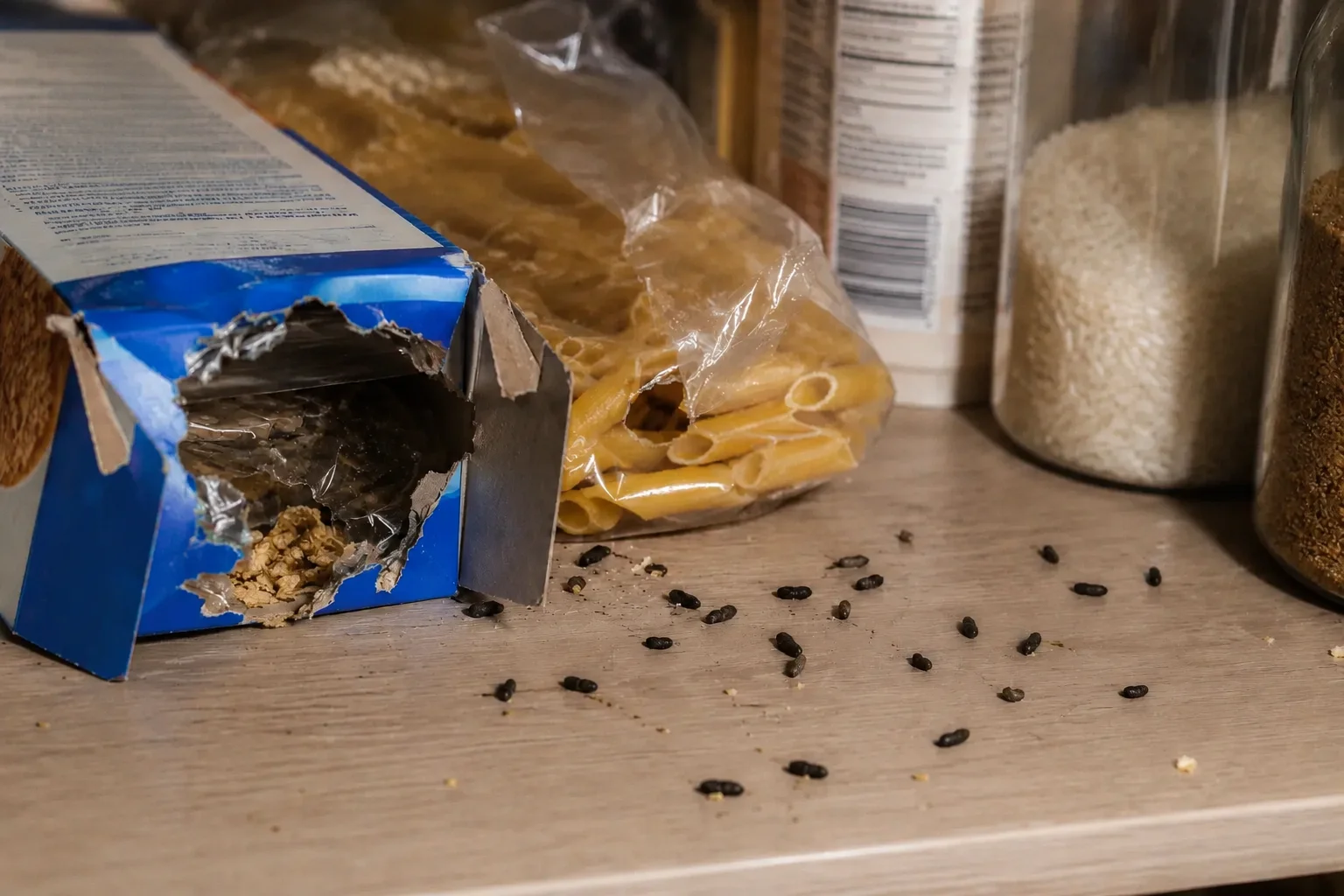
Mice are most active from September through February in Ireland, as falling temperatures drive them indoors. The house mouse (Mus musculus) can squeeze through a gap of just 6mm and breed rapidly once established inside a property. Understanding how they move and what drives them helps you tackle the problem at its source.


How to Get Rid of Mice: Step-by-Step
- 1Step 1 - Identify Where Mice Are Active
Before placing any traps or bait, spend 15 minutes inspecting the property. Look for:
- Droppings: 3-6mm, dark, spindle-shaped. Found along wall lines, behind fridges and cookers, under sinks, in food cupboards, in loft spaces.
- Gnaw marks: on food packaging, cables, skirting boards, woodwork. Fresh marks are pale; older marks are darker.
- Grease marks: dark smears along wall bases and around entry holes where mice rub their fur.
- Nesting material: shredded paper, insulation, cardboard. In loft voids, under kitchen units, inside cavity walls.
Note the locations of activity. This is where traps must go.
- 2Step 2 - Remove Food Sources
Mice need approximately 3g of food per day. Removing accessible food is as important as setting traps:
- Transfer all dry food (cereals, bread, rice, pasta) to airtight containers - tins or hard plastic. Cardboard boxes and foil pouches provide no barrier.
- Remove pet food bowls overnight - do not leave food out after feeding.
- Empty kitchen bins daily and use bins with tight-fitting lids.
- Clear debris, clutter, and cardboard from garages, sheds, and outbuildings - these become harbourage areas.
- Compost bins should be rodent-proof with a close-fitting lid and no accessible food scraps.
- 3Step 3 - Set Traps Along Wall Lines
Mice travel along wall edges and rarely cross open floor space. Traps placed in the open are rarely effective.
- Position snap traps at right angles to the wall, trigger end touching the skirting board.
- Place traps every 2-3 metres along known runs. More traps = faster results.
- Bait with peanut butter (highly effective), chocolate spread, or nesting material such as cotton wool.
- Check traps every 24 hours. Remove dead mice promptly - wearing disposable gloves - and reset.
- If a trap is triggered but empty after 3-4 days, move it - that run may no longer be active.
- Live-catch traps can be used but require daily checking and release well away from the property (min. 2km or mice re-enter).
- 4Step 4 - Seal Entry PointsCritical: Mice Enter Through Gaps of 6mm
A gap of 6mm - the width of a pencil or a 5-cent coin held on edge - is sufficient for a house mouse to enter. Sealing traps the current population inside for trapping but does not address future entry. Always proof after treatment is confirmed complete.
Common entry points:
- Around pipe work and cables where they enter through walls (gap around gas pipe, water pipes under sinks)
- Under external doors - fit a draught-excluding brush strip
- Air bricks and ventilation grilles - fit fine stainless mesh (not plastic, which mice gnaw through)
- Gaps in roof soffits, between roof tiles and fascia boards
- Through damaged brickwork or cracked pointing
Proofing materials: steel wool (Brillo-type) packed tightly into gaps, followed by mortar or flexible filler. Metal kick plates under external doors. Expandable foam alone is not sufficient - mice can gnaw through it.
- 5Step 5 - Monitor and Call a Professional If Needed
If you have set traps for 7-10 days and are still seeing fresh droppings or catching mice, you are either: dealing with an established infestation that requires a larger-scale baiting programme; missing entry points that are allowing continuous re-entry; or not covering all active run areas.
At this point, professional treatment is the most effective and economical next step.
How Much Is Pest Control for Mice in Ireland?
This is one of the most searched questions alongside how to get rid of mice. UK GBP prices from Checkatrade do not apply in Ireland. The following are indicative Irish EUR costs:
| Service | Price Guide | Notes |
|---|---|---|
| Standard residential mice treatment (3 visits) | Moderate investment | Survey + 2 follow-ups. Most common residential programme. |
| Emergency/same-day call-out | Cost-effective | Initial visit only. Follow-ups charged separately. |
| Proofing works (labour) - to be agreed | Affordable | Depends on scope. Materials charged at cost. |
| Commercial contract (monthly) | Ongoing value | HACCP-compliant documentation included. |
Disclaimer: Prices may vary depending on the time of year and weather conditions. Emergency calls may differ due to holidays, bank holidays and in-house training. Contact Wicklow Pest Control for a written quotation.
Frequently Asked Questions
-
How do you get rid of mice quickly?
The fastest method is a combination of snap traps placed at high-density along wall runs where you can see droppings, combined with immediate removal of all accessible food sources. Results are typically seen within 24-48 hours if traps are placed correctly. For an established infestation (multiple areas of activity, ongoing catch for more than a week), professional baiting with a PMU-certified pest controller achieves faster and more complete elimination. -
What keeps mice away permanently?
The only permanent solution is physical proofing - sealing all gaps of 6mm or wider that provide entry to the building. No repellent, ultrasonic device, or ongoing trap programme substitutes for blocking entry. After a professional treatment programme confirms the current infestation is eliminated, proofing recommendations should be implemented to prevent re-entry. A professional pest controller will survey and provide a written proofing report. -
What smell do mice hate?
Mice are repelled by strong-smelling compounds including peppermint oil, ammonia, and eucalyptus. These have some deterrent effect as a secondary measure but are not reliable as a primary control method - mice habituate to repellents over time, and no repellent blocks physical entry routes. Do not rely on smell-based deterrents as your main strategy; use them as a supplementary measure only. -
Does 2 mice mean an infestation?
Two mice in a property strongly indicates an infestation rather than a single isolated animal. Mice are rarely alone - where two are visible, the population within the property is typically much larger. A breeding pair of house mice can produce 5-10 litters per year with 3-14 young per litter. If you are seeing live or dead mice, or finding fresh droppings in multiple locations, treat it as an active infestation requiring prompt action. -
Will mice leave on their own?
Mice will not leave a property voluntarily as long as food, warmth, and shelter are available. Removing food sources reduces activity but rarely causes a full population to leave. Professional treatment with baiting and proofing is required to eliminate an established infestation.
Professional mice removal in Wicklow - costs & treatment plan
At this point, professional treatment is the most effective and economical next step.