
Why Are Mice Coming Into My House? (Autumn & Winter Guide)
Every autumn in Ireland, calls about mice increase sharply. October and November are peak months - not because mice are suddenly more numerous, but because falling temperatures give them a powerful reason to move inside.
Why Do Mice Come Indoors in Autumn?
The house mouse (Mus musculus) is not uniquely an outdoor or an indoor animal - it lives wherever it finds warmth, food, and shelter. During summer, many mice inhabit gardens, fields, hedgerows, and outbuildings. As autumn progresses and temperatures drop, the equation changes:
- 1. TemperatureMice are warm-blooded but small - they lose heat rapidly in cold conditions. A wall cavity, loft space, or under-unit void in an Irish house maintains a temperature significantly higher than outdoor conditions from October onwards. The energy cost of maintaining body temperature outdoors increases to a point where shelter becomes a survival imperative, not merely a preference.
- 2. Food Scarcity OutdoorsAutumn marks the end of the outdoor food flush. Grain harvests are complete, seed heads are depleted, and garden fruiting plants stop producing. Mice that have been sustained through summer on outdoor food sources begin to forage more widely in search of new supply. The food stores of a typical Irish house - dry goods, bread, pet food, compost bin - become a reliable and attractive alternative.
- 3. Breeding CyclesMouse populations peak in summer and early autumn. High population density creates pressure on available outdoor territory and food. When competition for resources is intense, younger or lower-status animals are displaced from established outdoor territories and begin exploring new areas - including buildings - in search of somewhere to establish themselves.
- 4. Structural Changes in Your HomeAutumn is also when many householders carry out maintenance - opening walls for insulation, disturbing garages and sheds while storing garden furniture, and creating new access points inadvertently. Construction activity in a neighbourhood can disturb mouse populations and send them searching for new habitats.
How Do Mice Get Into a House?
A house mouse can squeeze through a gap of 6mm - the width of a standard pencil or a 5-cent coin held on edge. Its skeleton is flexible and its skull, the widest part of its body, determines whether it can fit through a space. If its head fits, the rest of the body follows.
Irish houses offer numerous potential entry points that are invisible to a householder but obvious to a foraging mouse. The most common routes:
| Entry Point | Detail |
|---|---|
| Gaps around pipes | Gas pipes, water supply pipes, and waste pipes all pass through external walls. The gap between pipe and masonry is rarely sealed properly after installation. Even a 6mm gap is sufficient entry. |
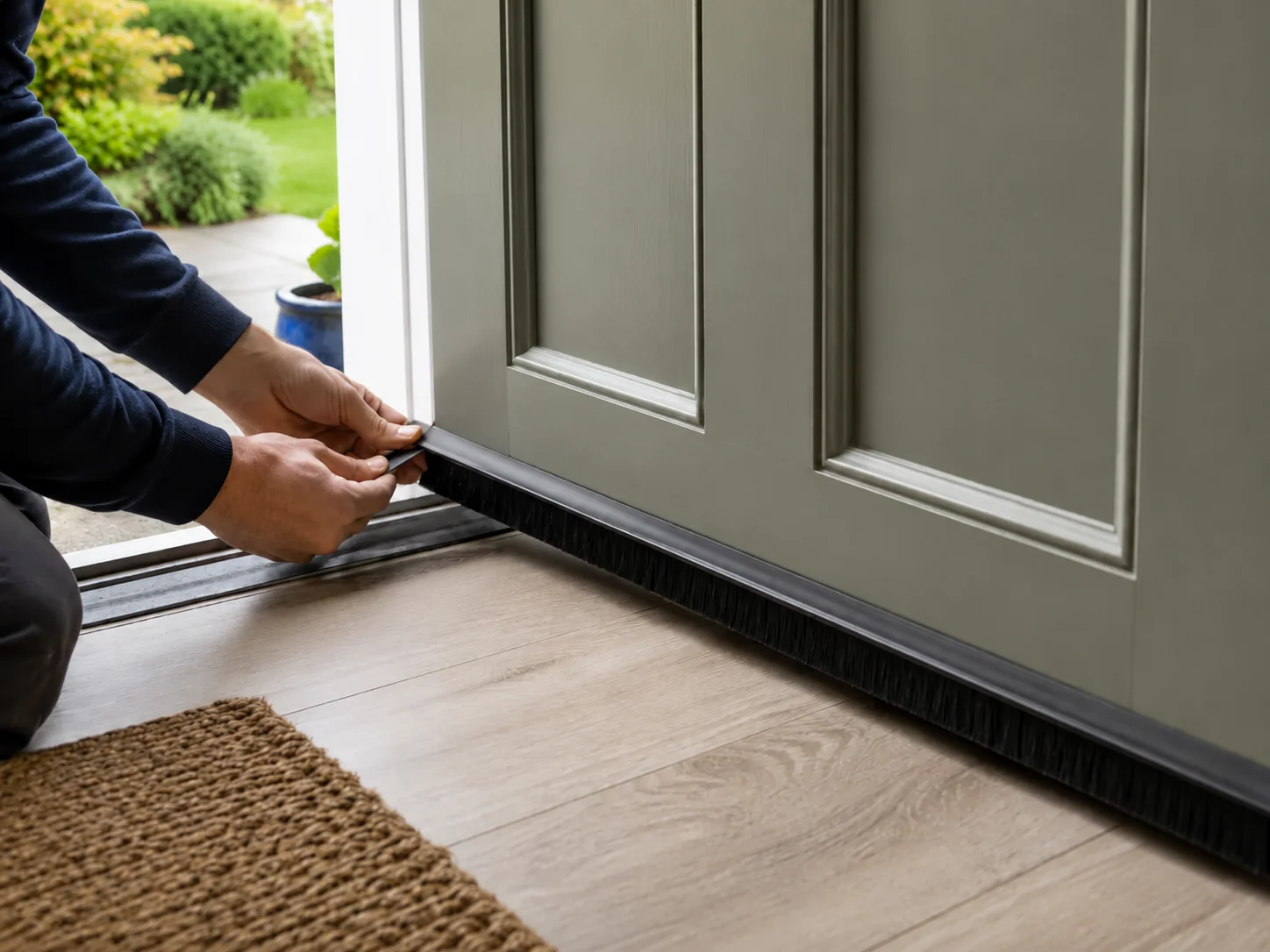
| Under external doors | Standard door-to-threshold gaps of 6-10mm are common and provide easy entry. Draught excluder brush strips - properly fitted - are one of the most effective proofing measures. |
| Air bricks and vents | Air bricks and sub-floor ventilation grilles have large enough openings for mice. Standard plastic grilles can be gnawed through; fine stainless steel mesh is required. |
| Roof and soffit gaps | Gaps between roof tiles and fascia boards, damaged soffit panels, and roof void access points. Mice are excellent climbers - the route to your loft via the external wall or adjacent trees is accessible. |
| Cable entries | Broadband cables, telephone lines, and electrical service entries often have gaps around them where they pass through the wall. |
| Damaged brickwork | Cracked pointing, spalled bricks, and damp-damaged masonry all create gaps that mice exploit. Common on older Irish housing stock. |
How to Stop Mice Coming Into Your House
The only reliable long-term solution is physical proofing - sealing all entry points. No trap, repellent, or deterrent substitutes for blocking entry. Here is a practical checklist for an Irish home:
This Weekend: Low-Cost, High-Impact Steps
- 1Fit draught-excluding brush strips to all external doors - front, back, and garage doors. Self-adhesive strips are available from hardware stores cost effective prices per door. Contact Us to know.
- 2Check under the kitchen sink. Feel around all pipe work for gaps. Pack steel wool (Brillo-type) tightly into any gap and seal over with filler or flexible sealant.
- 3Move all dry food into airtight containers - cereal boxes and bread bags provide no barrier to mice. Hard plastic or tin containers are effective.
- 4Remove pet food bowls after feeding. Do not leave water bowls accessible overnight in infested areas.
- 5Check your exterior compost bin - it should have a tight-fitting lid and no gaps at the base. Compost heaps directly on the ground are harbourage areas.
This Month: Structural Checks
- 6Inspect air bricks and ventilation grilles on the exterior of the house. Fit fine stainless steel mesh (not plastic - mice gnaw through it) if the openings are large enough for entry.
- 7Check all external pipe penetrations. Expanding foam alone is not sufficient - mice can gnaw through it. Use a combination of steel wool packed into the gap and cement or hard filler over the top.
- 8Walk the exterior of the house and look for gaps in pointing, cracks in brickwork, and damaged fascia or soffit panels. Note anything wider than 6mm for repair.
- 9Check the base of your garage door - many roller and up-and-over garage doors leave a significant gap under the seal. Metal excluder strips are available for most common garage door types.

Already Have Mice Indoors?
If mice are already inside, prevention alone will not resolve the problem - you need to eliminate the current population and then proof the entry points. Sealing entry points with mice already inside can prolong an infestation if no elimination is taking place simultaneously.
See our full guide: How to get rid of mice in Ireland - step-by-step treatment guide including costs and when to call a professional.
When to Call a Professional
If you are finding fresh droppings in multiple rooms, hearing scratching in ceiling voids or walls, or catching mice for more than a week without the numbers declining, the infestation is established. Professional treatment is the most effective and usually the most economical response:
- 1A PMU-certified pest controller carries out a full survey of the property and identifies all active areas - including areas inaccessible to householders
- 2Professional bait stations are placed at all active runs, not just visible areas. Bait take is monitored at each visit
- 3A written report confirms elimination and provides proofing recommendations to prevent re-entry
- 4For properties in Co. Wicklow and Leinster, Wicklow Pest Control provides 24-hour call-out and a structured mice treatment programme.
Professional mice removal in Wicklow - treatment programme and costs
For properties in Co. Wicklow and Leinster, Wicklow Pest Control provides 24-hour call-out and a structured mice treatment programme at cost effective prices for a standard residential property